
Meet the Grumman A-6E Intruder
US Navy BUNO - 162182
History
A-6 Intruder History: BUNO 162182
Built for the demanding mission of attacking targets in almost any weather, day or night, the Grumman A-6E Intruder became one of the United States Navy's most capable carrier-based strike aircraft.
Bureau Number 162182 served during the closing years of the Intruder's operational career, with records tracing its assignments from test and evaluation work through front-line fleet service, training duties and ultimately retirement.
Air Test and Evaluation Squadron Five – VX-5 “Vampires”
The documented history of BuNo 162182 begins in May 1987, when the aircraft was assigned to Air Test and Evaluation Squadron Five – VX-5 “Vampires.”
Based at Naval Air Weapons Station China Lake, California, VX-5 was responsible for the operational test and evaluation of aircraft, weapons and tactics before new capabilities were introduced into fleet service.
By this stage, the A-6E was already a mature combat aircraft, but the Intruder continued to receive improvements to its avionics, weapons compatibility and mission systems.
Aircraft assigned to VX-5 were therefore used to evaluate new weapons and capabilities intended for operational A-6 squadrons.
BuNo 162182 remained with VX-5 until approximately February 1988.
VA-145 “Swordsmen”
In June 1988, 162182 transferred to Attack Squadron 145 – VA-145 “Swordsmen.”
Based at NAS Whidbey Island, Washington, VA-145 was a front-line A-6E squadron assigned to Carrier Air Wing Two (CVW-2) aboard the aircraft carrier USS Ranger (CV-61).
This assignment placed 162182 within an operational carrier strike squadron during one of the most important periods of the A-6 Intruder's later service.
Desert Shield and Desert Storm
VA-145 deployed aboard USS Ranger to the Persian Gulf during the buildup to the 1991 Gulf War.
Following Iraq's invasion of Kuwait in August 1990, coalition forces began Operation Desert Shield, building military forces throughout the region in preparation for the possibility of combat.
When Operation Desert Storm began in January 1991, the A-6E Intruder became one of the Navy's principal carrier-based strike aircraft.
The Intruder was particularly suited to the campaign. Its sophisticated navigation and attack systems allowed it to conduct precision strike missions at night and in poor weather, while its ability to carry a substantial weapons load made it invaluable against heavily defended targets.
Records for BuNo 162182 show extensive activity during the December 1990 through August 1991 period, corresponding with VA-145's Gulf deployment and the exceptionally high operational tempo surrounding Desert Shield and Desert Storm.
Because the available records establish that the aircraft was assigned to VA-145 during this deployment, 162182 was present with a combat squadron operating during the Gulf War.
Without individual flight logs or mission records, however, specific combat sorties should not be attributed to 162182 with certainty.
VA-145 remained one of the aircraft's most significant assignments until approximately December 1991.
VA-128 “Golden Intruders”
Following its operational fleet service, 162182 transferred in March 1992 to Attack Squadron 128 – VA-128 “Golden Intruders.”
VA-128 was also based at NAS Whidbey Island and served as the Navy's Fleet Replacement Squadron for the A-6 Intruder community.
Rather than deploying aboard aircraft carriers as a front-line combat unit, VA-128 was responsible for training the pilots and bombardier/navigators who would operate the Intruder in fleet squadrons.
For BuNo 162182, this represented a very different stage of its career.
Having previously served with a test squadron and then an operational carrier unit, the aircraft was now being used to help prepare new generations of naval aviators for service with the A-6 fleet.
162182 remained associated with VA-128 until approximately December 1992.
Return to Grumman
The final chapter in the aircraft's documented service began in December 1992.
Records list 162182 with:
DPRO GRUMMAN BETHPA
This referred to the Defense Plant Representative Office at the Grumman facility in Bethpage, New York, the company responsible for designing and manufacturing the A-6 Intruder.
Its return to Grumman came as the Navy was beginning to reduce the size of the A-6 fleet.
By the early 1990s, the Intruder was approaching the end of a service career that had begun during the Vietnam War. Aircraft were gradually being withdrawn as the Navy transitioned their strike mission to newer platforms.
BuNo 162182 remained recorded with Grumman through July 1994, when its surviving service records come to an end.
A Career Spanning the Intruder's Final Years
The career of A-6E Intruder BuNo 162182 represents many of the roles performed by the Intruder during its final decade of U.S. Navy service.
It began its documented history helping evaluate weapons and systems with VX-5 “Vampires.”
It then moved to the front line with VA-145 “Swordsmen,” serving with a carrier air wing during the period encompassing Operations Desert Shield and Desert Storm.
Following its operational service, it helped train future Intruder crews with VA-128 “Golden Intruders” before ultimately returning to Grumman as the Navy began winding down the A-6 program.
From weapons testing at China Lake to carrier operations aboard USS Ranger and training at Whidbey Island, BuNo 162182's career reflects the versatility and enduring importance of the A-6E Intruder during the aircraft's final years in naval service.
TLDR; The Navy’s All-Weather Attack Workhorse
A-6E Intruder BuNo 162182 served the U.S. Navy during the final decade of the Intruder's operational career. Its documented assignments included VX-5 “Vampires” at China Lake, the front-line VA-145 “Swordsmen” aboard USS Ranger during the period encompassing Operations Desert Shield and Desert Storm, and VA-128 “Golden Intruders,” where it helped train future Intruder aircrew. Its final records place it with Grumman at Bethpage, New York, through July 1994, as the Navy began drawing down the A-6 fleet.
Gallery


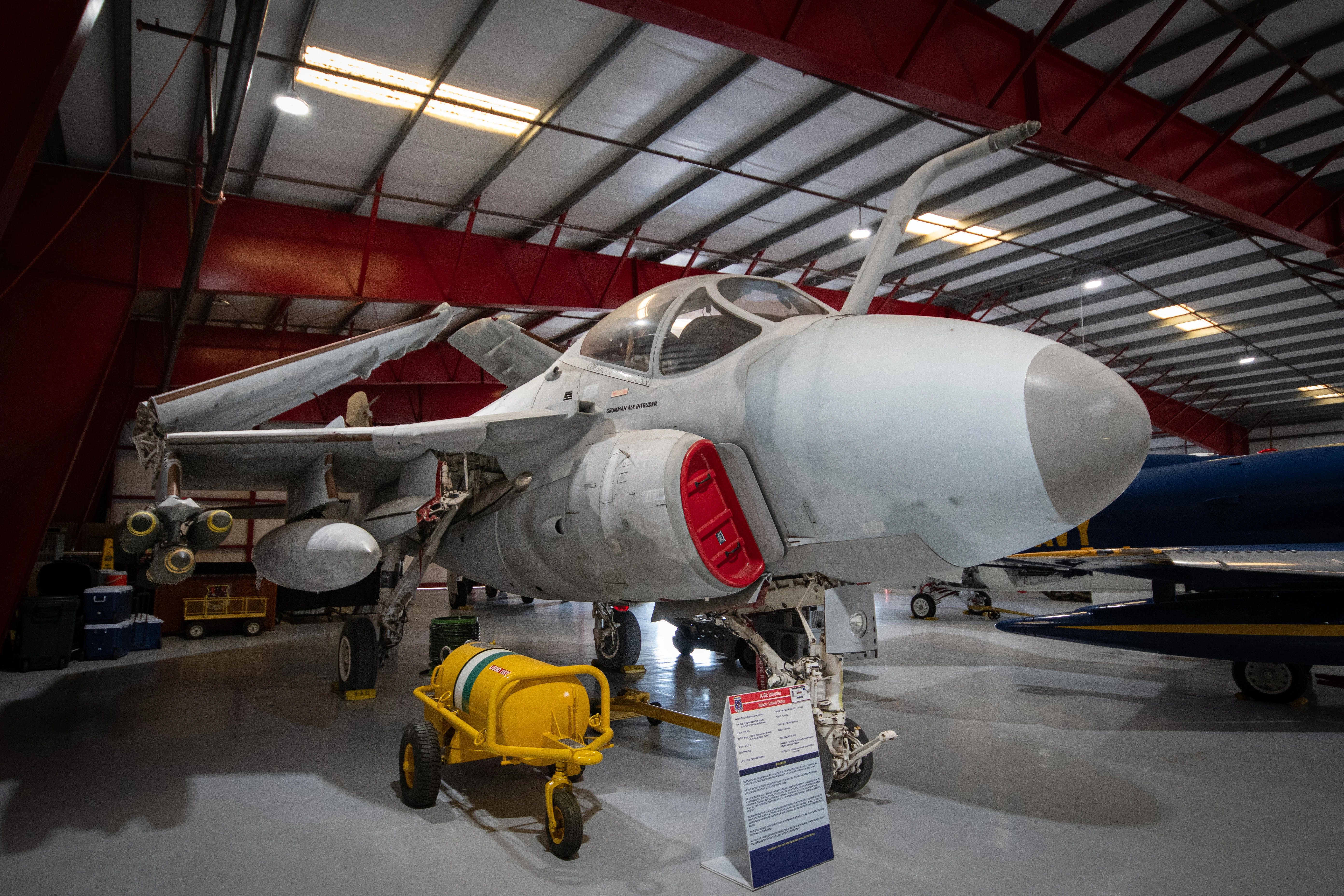
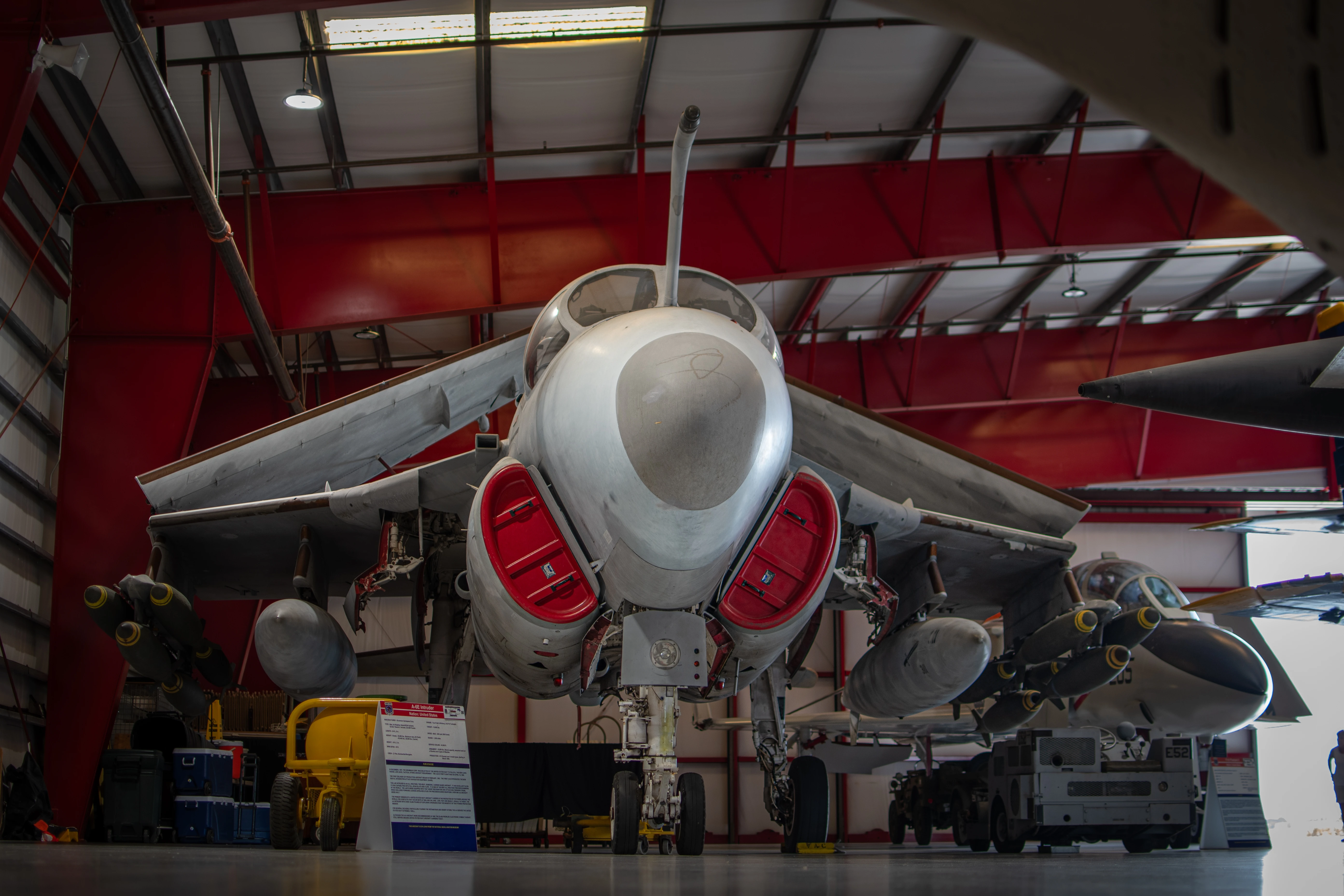
“This aircraft on loan from the National Naval Aviation Museum on behalf of the Navy History and Heritage Command”