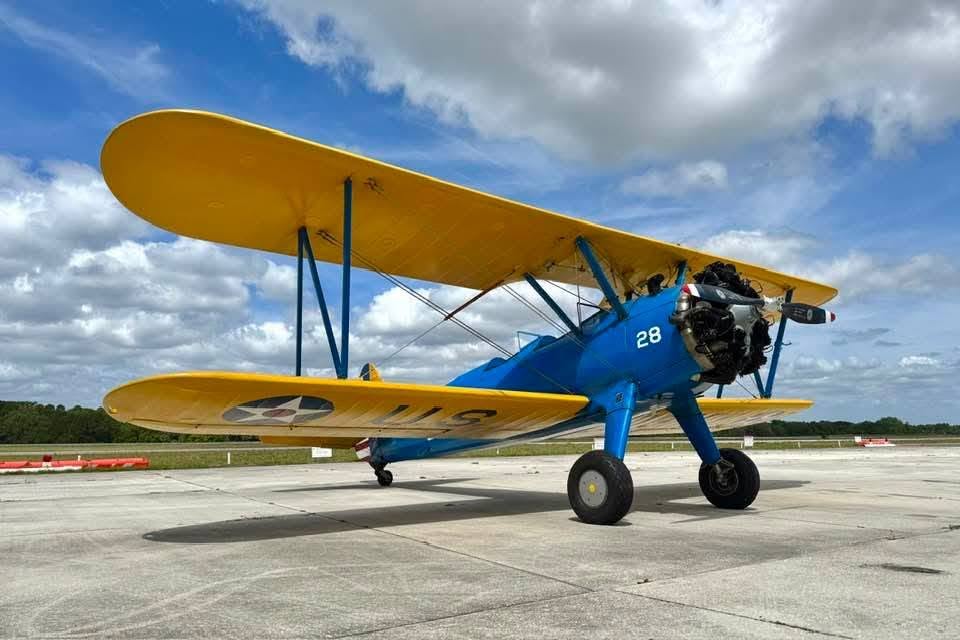
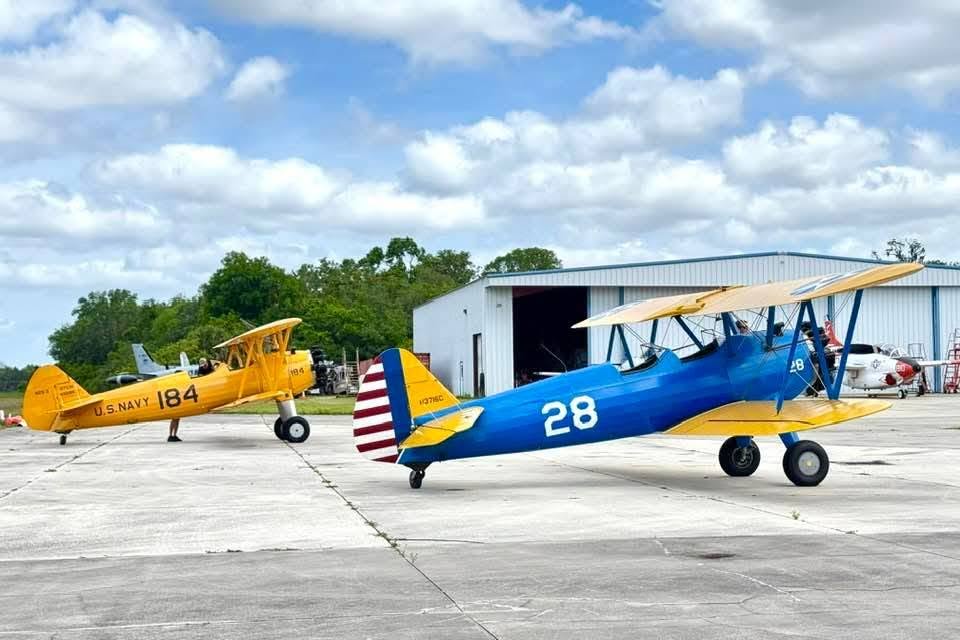
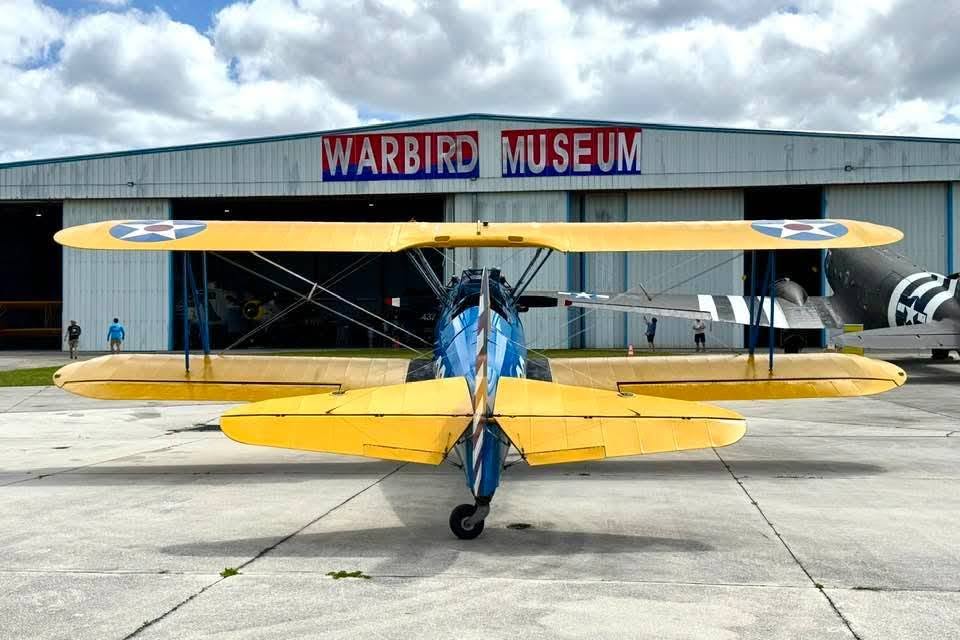
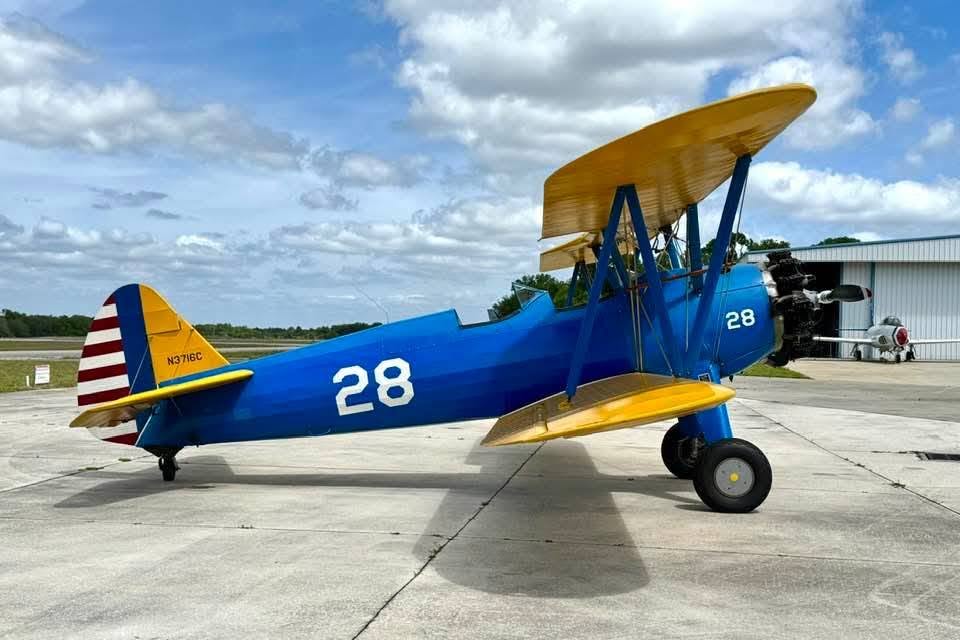
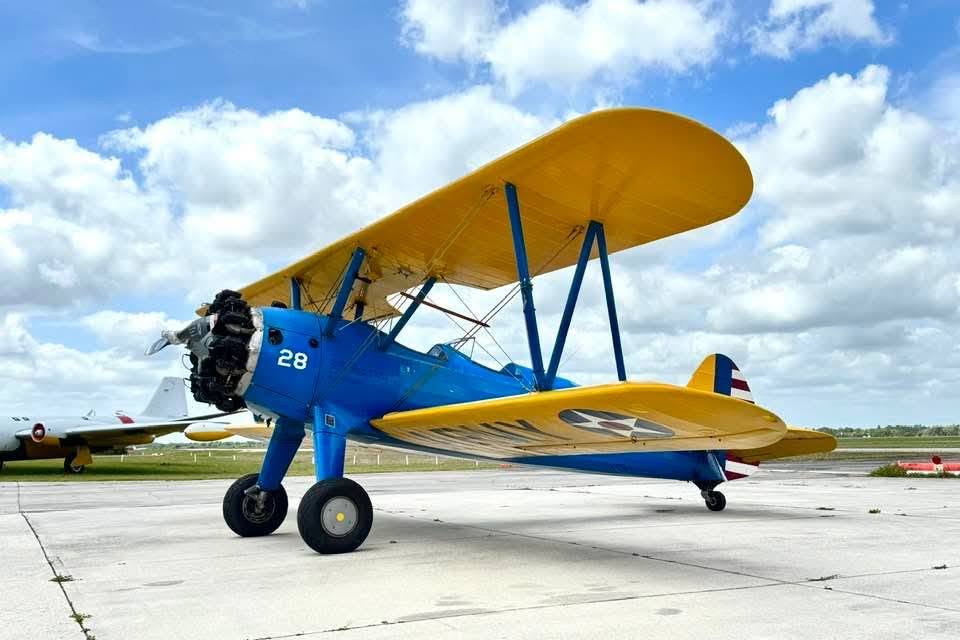
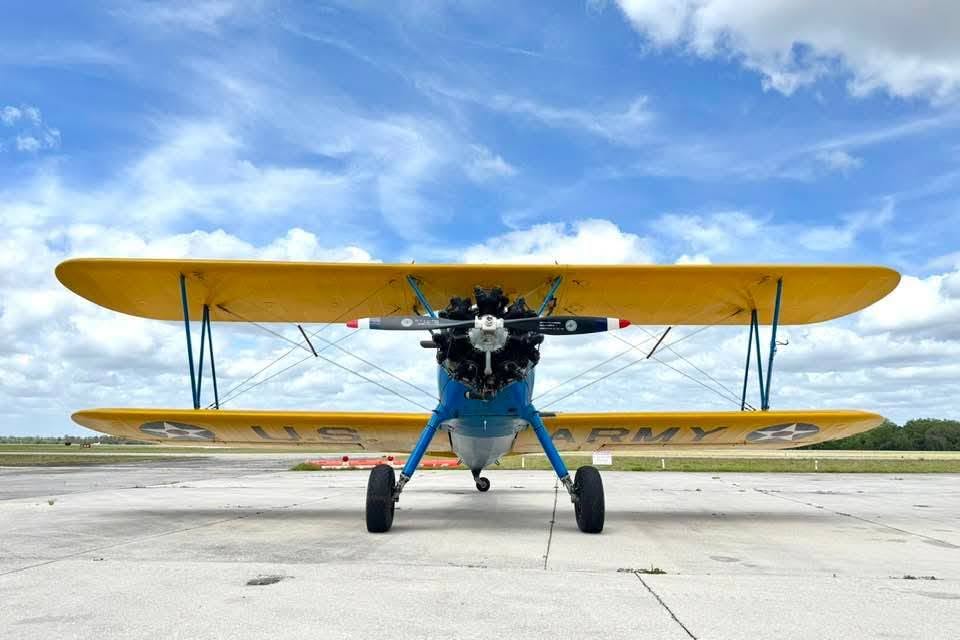
Meet the Boeing Stearman PT-13D
BUNO - 42-16870
History
Boeing Stearman PT-13D - Serial : 42-16870
A World War II Trainer with a Documented Tuskegee Connection
The Boeing Stearman PT-13D, U.S. Army Air Forces serial number 42-16870, was built during World War II as part of the enormous American effort to train the thousands of pilots required for wartime service.
The Stearman was one of the principal primary trainers used by the United States military. Rugged, dependable, and well suited to instruction, it introduced aviation cadets to the fundamentals of military flying before they progressed to faster and more advanced training aircraft.
Student pilots used aircraft like 42-16870 to learn aircraft handling, takeoffs and landings, stalls and spins, aerobatics, navigation, formation flying, and the basic disciplines required of a military aviator.
Entering Military Service — August 1943
On August 4, 1943, PT-13D 42-16870 was accepted and delivered to the United States Army at the Boeing Airplane Company plant in Wichita, Kansas.
It was immediately assigned to a Contract Pilot School operated by the Rankin Aeronautical Academy in Tulare, California, under the 2039th Base Unit.
The aircraft arrived at Rankin Aeronautical Academy on August 7, 1943, beginning its career in the Army Air Forces pilot-training system.
Contract flying schools played a critical role during World War II. Civilian instructors and facilities operated under military supervision, greatly increasing the number of aviation cadets the Army Air Forces could train.
Eagle Field, California — December 1943
On December 27, 1943, 42-16870 was transferred to another Contract Pilot School operated by the Coast Aviation Corporation at Eagle Field in Dos Palos, California.
The school operated under the 3039th Base Unit.
The Stearman continued performing the mission for which it had been designed: introducing future military pilots to powered flight and preparing them for the next stages of Army Air Forces training.
Orlando, Florida — March 1944
On March 20, 1944, 42-16870 was transferred across the country to the Army Technical School at Orlando Air Base, Florida.
Its assignment in Orlando was relatively brief.
Lodwick School of Aeronautics — April 1944
On April 25, 1944, the aircraft was reassigned to the Lodwick School of Aeronautics in Lakeland, Florida, another Contract Pilot School supporting the Army Air Forces training program.
The school operated under the 2160th Base Unit.
Less than two weeks later, however, 42-16870 received the assignment that makes this particular Stearman especially significant.
Tuskegee Institute — May 6, 1944
On May 6, 1944, Boeing Stearman PT-13D 42-16870 was assigned to the Contract Pilot School at:
Tuskegee Institute
2164th Base Unit
Tuskegee Institute Field No. 2
Tuskegee, Alabama
This assignment placed the aircraft directly within the primary flight-training program associated with the men now collectively remembered as the Tuskegee Airmen.
The Tuskegee aviation program trained African American military pilots during World War II. Primary flight instruction was the first major stage of their aviation training, during which cadets learned the fundamental flying skills required before progressing into more advanced military aircraft.
The Stearman was ideally suited to this role. Its open cockpits, conventional landing gear, relatively simple systems, and responsive handling provided students with an excellent introduction to military aviation.
The documented military assignment history of 42-16870 confirms that this individual aircraft served within the Tuskegee primary-training organization.
The surviving assignment records do not identify which individual Tuskegee cadets or instructors flew this particular aircraft. Therefore, it should not be associated with a specific Tuskegee Airman unless additional aircraft logbooks or pilot records are located.
What can be said with confidence is that 42-16870 is a documented Tuskegee training aircraft, rather than simply a Stearman later painted to represent one.
The aircraft remained assigned to the Tuskegee program for more than seven months.
Columbus Army Air Field — December 1944
On December 25, 1944, 42-16870 left Tuskegee and was reassigned to Columbus Army Air Field in Mississippi.
There it served with the 2113th Base Unit and Army Flying School, remaining within the Army Air Forces training establishment as World War II entered its final year.
Stewart Field, New York — April 1945
On April 19, 1945, the Stearman was transferred to Stewart Field in Newburgh, New York, where it served with the Army Flying School, Basic, 2002nd Base Unit.
When 42-16870 arrived at Stewart Field, the war in Europe was approaching its conclusion. Germany surrendered only a few weeks later in May 1945, although the war against Japan continued until August.
Despite the end of World War II, the Stearman remained in government service.
Randolph Field, Texas — September 1946
On September 19, 1946, 42-16870 was transferred to Randolph Field in San Antonio, Texas.
There it served under Central Flying Training Command Headquarters and the 2832nd Base Unit.
Randolph was one of the most important centers of American military aviation training. By this point, the enormous wartime training establishment was being reduced, but many surviving trainers continued performing useful military duties.
From the Army Air Forces to the United States Air Force
Another important moment in the aircraft's history occurred on September 18, 1947, when the United States Air Force became an independent branch of the U.S. Armed Forces.
42-16870 had entered service in 1943 as a U.S. Army aircraft and served through World War II as part of the Army Air Forces.
It now became part of the newly independent United States Air Force inventory.
Goodfellow Air Force Base — December 1947
On December 25, 1947, the aircraft was assigned to Goodfellow Air Force Base in San Angelo, Texas.
It served with Air Training Command and the U.S. Air Force Flying School, Basic and Primary, 2533rd Base Unit.
More than four years after entering wartime service, 42-16870 remained connected with military flight training.
Civil Air Patrol Service — 1948
On February 17, 1948, the aircraft was transferred from Air Training Command to the Civil Air Patrol.
The Civil Air Patrol had played an important role during World War II and continued conducting aviation, training, emergency, and support activities during the postwar years.
On March 28, 1948, 42-16870 was assigned to Civil Air Patrol operations at Bolling Field in Washington, D.C.
On July 18, 1948, it was transferred again, this time to the Civil Air Patrol organization at Bryan Air Force Base in Texas.
The aircraft remained associated with the Civil Air Patrol through the remainder of 1948.
Return to Air Force Control — January 1949
On January 14, 1949, 42-16870 was transferred from the Civil Air Patrol back to United States Air Force control under Air Materiel Command.
It initially remained at Bryan Air Force Base.
On February 14, 1949, it was transferred to Big Spring Air Force Base, Texas.
Only a month later, on March 15, 1949, it was reassigned to Pyote Air Force Base, Texas.
Pyote would become the final military assignment of 42-16870.
End of Military Service — June 13, 1949
On June 13, 1949, Boeing Stearman PT-13D 42-16870 was formally stricken from United States Air Force records at Pyote Air Force Base.
The aircraft was transferred to the War Assets Administration, the federal organization responsible for disposing of government equipment no longer required following World War II.
This concluded almost six years of documented military and government service.
But unlike many wartime aircraft that were eventually scrapped, 42-16870 survived.
Civilian Life — N3716C
Following its release from government service, the Stearman entered the civilian aviation world.
Its eventual civilian registration became:
N3716C
Its Boeing construction number, 75-5033, provides the continuing link between civilian N3716C and its original wartime identity as PT-13D 42-16870.
There is a gap in the readily available documentation covering the aircraft's earliest post-military years. Without additional logbooks or ownership records, its exact owners and activities during the 1950s should not be assumed.
Davis Flying Service — 1960s and Early 1970s
By January 1964, N3716C was registered to Davis Flying Service, Inc. of Nitta Yuma, Mississippi.
Records continued to associate the Stearman with Davis Flying Service into the early 1970s.
Many surplus Stearmans found new civilian careers after World War II, particularly in agricultural aviation, flight training, airshows, and private flying. However, without additional records specifically documenting how N3716C was used during this period, its exact duties with Davis Flying Service should not be overstated.
What is certain is that the aircraft survived its transition from military to civilian life.
Airworthiness and Civilian Configuration
An airworthiness certificate for N3716C was issued on August 13, 1991.
Civil registration records have subsequently identified the aircraft under the broader Boeing Model 75 family while retaining its construction number 75-5033.
During its long civilian career, the aircraft's configuration changed from its original wartime PT-13D specification.
Modern records identify N3716C as being powered by a Continental W670-series radial engine rather than the Lycoming engine originally associated with the PT-13D designation.
Such changes were common among former military Stearmans during their decades of civilian operation.
Florida — 1998
On December 16, 1998, N3716C was registered to Kathy Robinson of Boynton Beach, Florida.
The former wartime trainer had now arrived in the state where it would eventually be stored at Valiant Air Command.
Ian Cummings — 2003
On November 22, 2003, N3716C was registered to Ian W. Cummings of Palm City, Florida.
The aircraft was associated with the Fort Pierce area and continued to survive as an airworthy historic aircraft.
During this period, N3716C appeared at aviation gatherings and events, including an appearance at SUN 'n FUN in Lakeland, Florida, in 2012.
Registration records continued to associate the aircraft with Cummings for many years.
2025 — New Registration
In April 2025, registration records for N3716C changed to No Name Aviation LLC of Wilmington, Delaware.
The aircraft retained its long-standing civilian registration:
N3716C
and its original Boeing construction number:
75-5033
Valiant Air Command
Today, the historic Stearman is privately owned and stored at the Valiant Air Command Warbird Museum at Space Coast Regional Airport in Titusville, Florida.
The aircraft is not owned by Valiant Air Command, but its presence at the museum allows visitors to see an aircraft with a documented connection to one of the most significant military aviation training programs of World War II.
More than eight decades after being accepted by the United States Army in Wichita, the same airframe survives.
Its three principal identities provide the link across its long history:
U.S. Army Air Forces / U.S. Air Force Serial Number: 42-16870
Boeing Construction Number: 75-5033
Civil Registration: N3716C
A Documented Tuskegee Training Aircraft
The most historically significant chapter in the life of 42-16870 began on May 6, 1944, when the aircraft was assigned to the 2164th Base Unit at Tuskegee Institute.
That assignment places this individual Stearman within the primary flight-training organization associated with the Tuskegee Airmen.
Following its Tuskegee service, the aircraft continued serving through the end of World War II and into the postwar era. It passed from the United States Army and Army Air Forces into the newly created United States Air Force, served with the Civil Air Patrol, survived postwar surplus disposal, and spent decades in civilian aviation.
Today, Boeing Stearman PT-13D 42-16870 / N3716C, while privately owned and stored at Valiant Air Command, represents a tangible connection to America's World War II pilot-training effort, the groundbreaking aviation program at Tuskegee, the transition from the Army Air Forces to the United States Air Force, and more than eight decades of American aviation history.
TLDR; Boeing Stearman PT-13D — A Tuskegee Airmen Primary Trainer
The Boeing Stearman PT-13D was a primary trainer used by the U.S. Army Air Forces during World War II to teach student pilots the fundamentals of military flying. Rugged and forgiving, it was used for instruction in takeoffs, landings, aerobatics, stalls, spins, navigation, and formation flying before cadets advanced to more powerful aircraft.
Valiant Air Command’s privately owned PT-13D 42-16870 entered service in 1943 and has a documented assignment to the 2164th Base Unit at Tuskegee Institute in 1944, placing this individual aircraft within the primary flight-training program associated with the Tuskegee Airmen. It later served with the U.S. Air Force and Civil Air Patrol before entering civilian ownership as N3716C, and today it is stored at Valiant Air Command.